
Grants
Grants Listings Active From 2021
PI | Institute | Title | EPSRC Ref # | Start | End |
Ian Walmsley | University of Oxford | UK quantum technology hub: NQIT | EP/M013243/1 | 01/12/2014 | 30/11/2021 |
Ben Murdin | University of Surrey | Atomically deterministic doping and readout for semiconductor solotronics | EP/M009564/1 | 01/02/2015 | 31/01/2022 |
Richard Curry | University of Manchester | Development and application of non-equilibrium doping in amorphous chalcogenides | EP/N020057/2 | 01/01/2017 | 31/10/2022 |
Graham Reed | University of Southampton | Southampton-Rockley Prosperity Partnership | EP/R003076/1 | 01/09/2017 | 31/10/2022 |
David Armstrong | University of Oxford | Radiation resistant high entropy alloys for fast reactor cladding applications | EP/R006245/1 | 01/01/2018 | 31/12/2021 |
Karl Whittle | University of Liverpool | MAINTAIN: Multi-scale integrity assessment for advanced high-temperature nuclear systems | EP/R01826X/1 | 01/01/2018 | 31/03/2021 |
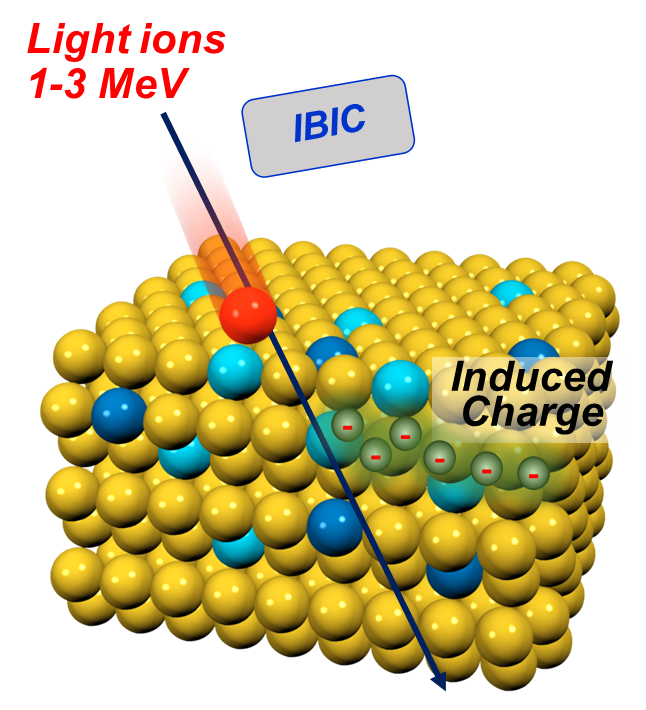
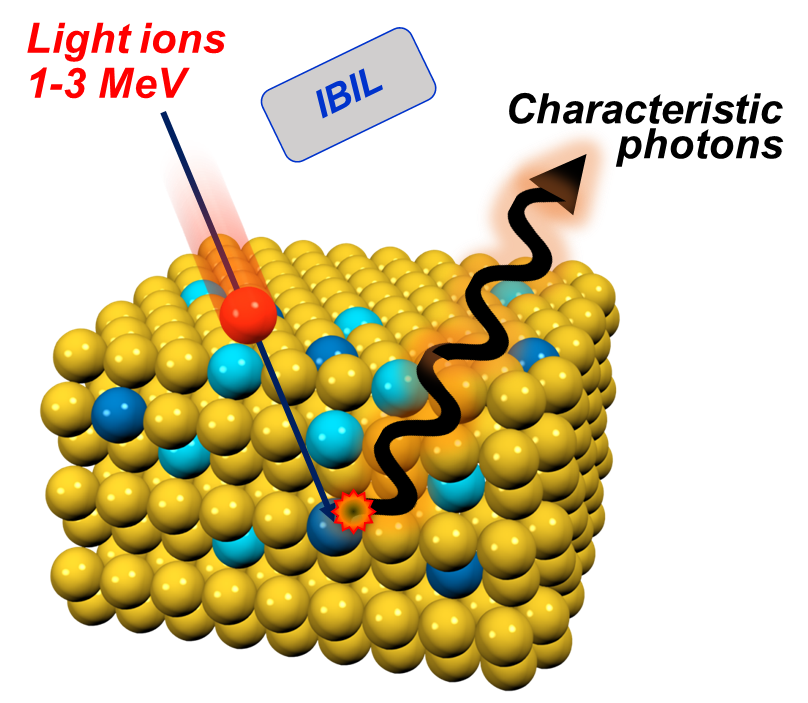
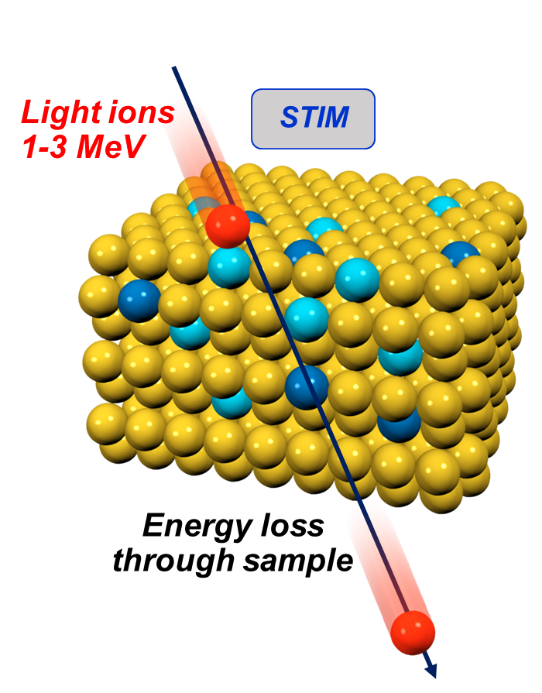
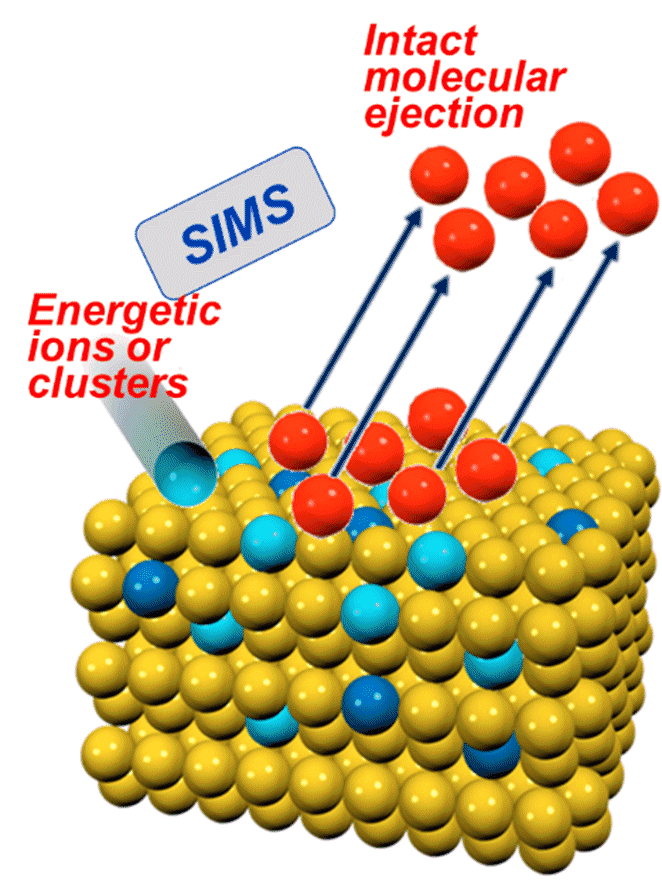
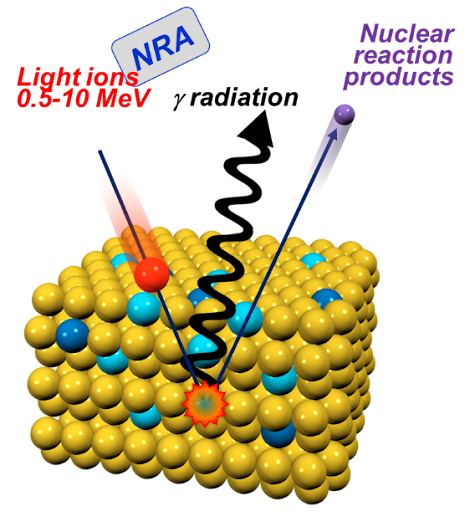
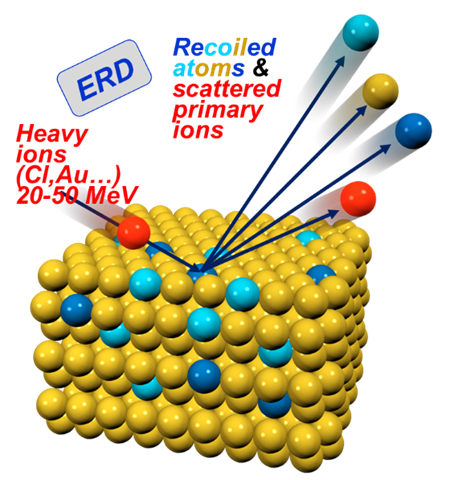
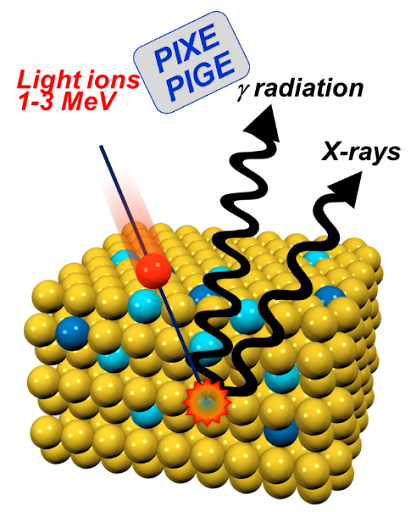
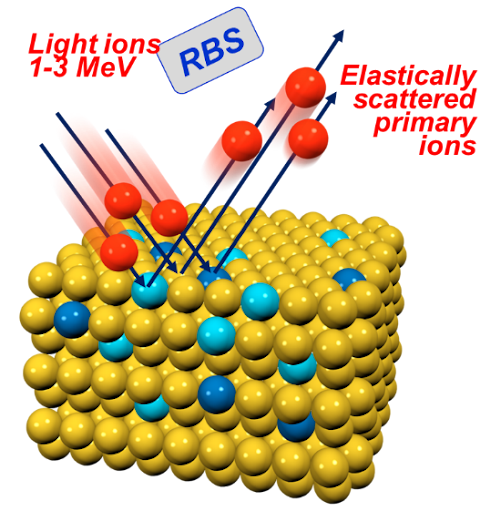
Melanie Bailey | University of Surrey | Ion beam analysis for the 2020s and beyond | EP/R031118/1 | 01/10/2018 | 21/10/2024 |
Isaac Luxmoore | University of Exeter | Ultrafast quantum light sources | EP/S001557/1 | 29/06/2018 | 28/06/2021 |
Neil Hyatt | University of Sheffield | Transformative science and engineering for nuclear decommissioning (TRANSCEND) | EP/S01019X/1 | 01/09/2018 | 31/09/2023 |
Bruce Hanson | University of Leeds | ATLANTIC – Accident tolerant fuels in recycling | EP/S011935/1 | 01/12/2018 | 30/11/2022 |
Amy Gandy | University of Sheffield | Development of radiation damage resistant high entropy alloys for advanced nuclear systems | EP/R021864/1 | 01/08/2018 | 31/07/2021 |
Charles Smith | Cambridge University | Multiplexed Quantum Integrated Circuits | EP/S019324/1 | 01/03/2019 | 28/02/2022 |
Shinichi Saito | University of Southampton | Photonics at interface – heterogeneous integrations for generation detection | EP/S034242/1 | 01/06/2019 | 31/05/2023 |
Richards | University of Sheffield | Plugging the 1eV bandgap – GaAsBiN as a highly mismatched alloy | EP/S036792/1 | 02/09/2019 | 01/05/2022 |
Ken Durose | University of Liverpool | New Designs of thin film solar cells | EP/T006188/1 | 01/10/2019 | 03/09/2022 |
Petropoulos | University of Southampton | Silicon-rich silicon nitride Nonlinear Integrated Photonic ciRcuits & Systems (juNIPeRS) | EP/T007303/1 | 01/10/2019 | 31/03/2023 |
Armstrong | University of Oxford | Ni-based ODS alloys for Molten Salt Reactors | EP/T002441/1 | 01/12/2019 | 30/11/2022 |
Seeds | UCL | QUantum Dot On Silicon systems for communications, information processing and sensing (QUDOS) | EP/T028475/1 | 01/05/2020 | 30/04/2025 |
Reed | University of Southampton | CORNERSTONE 2 | EP/T019697/1 | 01/01/2020 | 31/12/2021 |
Armstrong | University of Oxford | EPSRC Centre for Doctoral Training in Fusion Energy Science and Training | EP/S022430/1 | 01/10/2020 | 31/03/2028 |
Patel | University of Liverpool | Intermediate range order effects in radioactive waste glasses | EP/T016337/1 | 01/01/2021 | 31/12/2023 |
Zhao | University of Surrey | Scalable fabrication of on-chip Li CO2 batteries for efficient electrocatalysts | EP/V002260/1 | 05/01/2021 | 04/01/2023 |
Reed | University of Southampton | Towards a revolution in optical communications | EP/V012789/1 | 01/02/2021 | 31/01/2024 |
Graham Reed | University of Southampton | MISSION (Mid-Infrared Silicon Photonic Sensors for Healthcare and Environmental Monitoring) | EP/V047663/1 | 01/07/2021 | 30/06/2026 |
Mark Netwon /Ben Green | University of Warwick | Engineered Diamond Technologies | EP/V056778/1 | 01/07/2021 | 30/06/2026 |
Mike Walls | University of Loughborough | Doped emitters to unlock lowest cost solar electricity | EP/W00092X/1 | 01/08/2021 | 31/07/2024 |
Cristian Bonato | Heriot-Watt University | Quantum Magnetometry Facility | EP/V053779/1 | 01/03/2021 | 28/02/2025 |
Curry | University of Manchester | Nanoscale Advanced Materials Engineering | EP/V001914/1 | 01/07/2021 | 30/06/2026 |
Steve Clowes | University of Surrey | RAISIN – QA network for single ion implantation technologies and science | EP/W027070/1 | 14/02/2022 | 13/02/2025 |
Susanah Speller | University of Oxford | High temperature superconductors for fusion technologies | EP/W011743/1 | 01/06/2022 | 31/05/2027 |
Sandy Knowles | University of Birmingham | Intermetallic Dispersion Strengthened ‘IDS-Steels’ for Generation IV Nuclear | EP/T016566/1 | 01/07/2022 | 30/06/2025 |
Graham Reed | University of Southampton | CORNERSTONE 2.5 | EP/W035995/1 | 02/12/2022 | 01/12/2024 |
Steve Clowes | University of Surrey | Route to high-precision positioning of single ion-implanted impurities | EP/X018989/1 | 01/02/2023 | 30/06/2024 |
O Williams | Cardiff University | Next generation acoustic wave filter platform | EP/W036827/1 | 01/09/2023 | 31/08/2026 |
A Bennett (Hadden) | Cardiff University | Quantum GaN-O-Photonics | EP/X03982X/1 | 01/02/2024 | 31/01/2027 |
Martin Kuball | University of Bristol | Transforming Solid-State Circuit Breakers (ULTRAlGaN) | EP/X035360/1 | 01/05/2024 | 30/05/2029 |
Radu Sporea | University of Surrey | Multipurpose Electronics Toolkit using Suspended Membranes: towards Systems on Nothing | EP/Y000196/1 | 22/03/2024 | 21/03/2027 |
Martin Kuball | Cardiff University | Transforming Net Zero with Ultrawide Bandgap Semiconductor Device Technology (REWIRE) | EP/Z531091/1 | 01/04/2024 | 31/03/2029 |
Joy Farnaby | University of Glasgow | Experimental Actinide Nano-chemistry for the Future of the Civil UK Plutonium Inventory | MR/X036634/1 | 01/04/2024 | 01/04/2028 |
Graham Reed | University of Southampton | CORNERSTONE Photonics Innovation Centre (C-PIC) | EP/Z531066/1 | 01/06/2024 | 31/05/2029 |
G Buller | Heriot-Watt University | Integrated Quantum Networks (IQN) quantum technology hub | EP/Z533208/1 | 01/12/2024 | 30/11/2029 |
R McKendry | UCL | Q-BIOMED | EP/Z533191/1 | 31/03/2026 | 31/08/2029 |