
Why measure metals in proteins?
- Proteins are basic components of biochemical processes including cell function, tissue building, disease processes and metal transport (e.g. haemoglobin).
- Proteins are linear chains of amino acids folded into complex 3D shapes. Shape determines function.
- Many proteins contain small numbers of metal atoms. X-ray crystallography is routinely used to determine the position of each non-hydrogen atom in a protein, including metals. However, this relies on fitting the electron density, which does not allow the unambiguous identification of the metal.
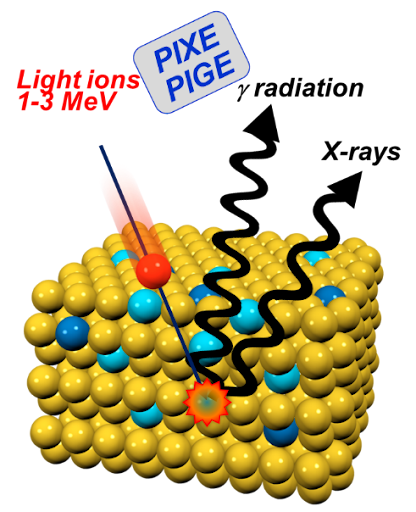
- Micro particle induced X-ray emission (µPIXE) can identify and quantify unknown metal atoms in proteins.
The scale of the problem
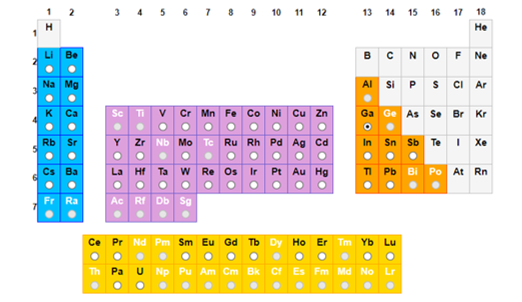
- Over one third of all proteins with known 3-D structure are identified as containing metal atoms or binding sites.
- Elements with round white symbols have been identified in a protein structure.