
Metalloprotein Analysis







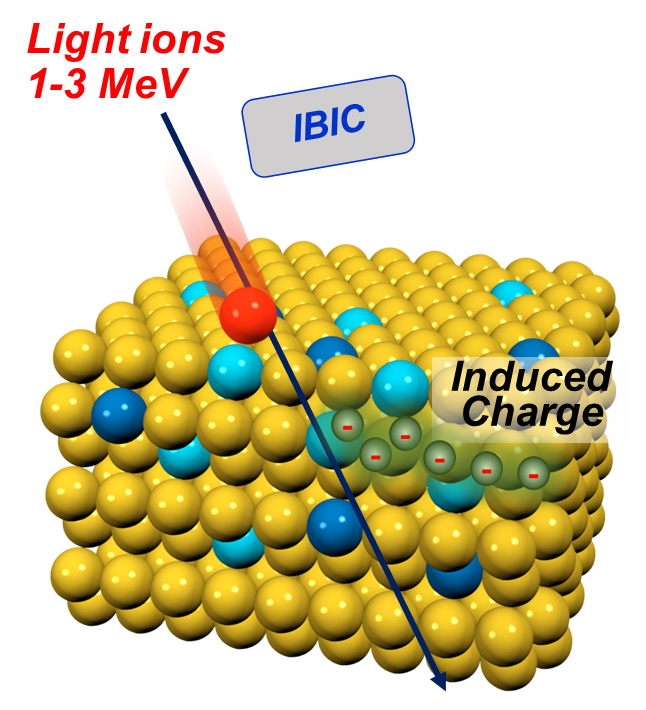
Ion Beam Induced Current (IBIC) : Measures the charge collection efficiency or current generated in an electronic or semiconductor device when irradiated with an ion beam. IBIC provides spatially resolved maps of electrical activity, carrier transport, and radiation damage, enabling the evaluation of detector performance and semiconductor device integrity.
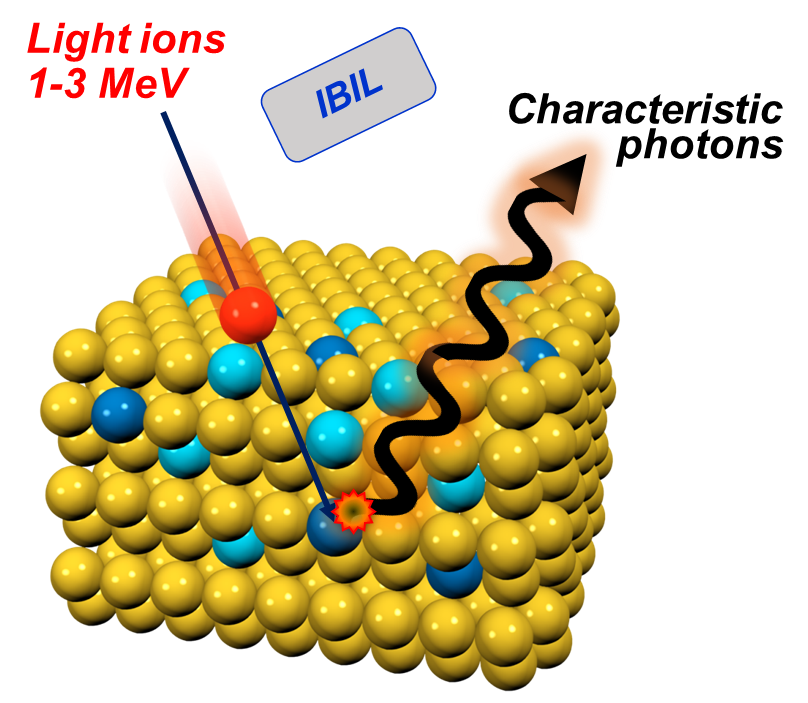
Ion Beam Induced Luminescence (IBIL) : Detects visible or near-visible photons emitted from the sample as a result of ion excitation. The luminescence spectrum reveals information about electronic structure, impurities, and defect states, making IBIL a valuable tool for studying semiconductors, minerals, and scintillating materials.
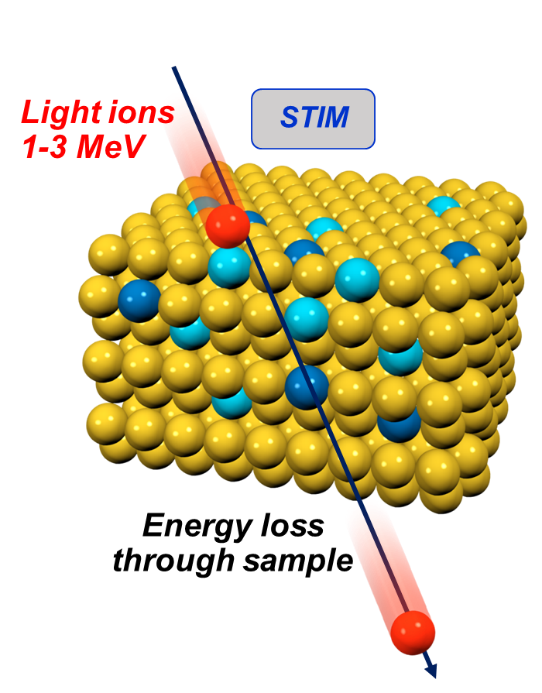
Scanning Transmission Ion Microscopy (STIM) : Uses a finely focused MeV ion beam scanned across a thin specimen. By measuring the energy loss or transmitted particle intensity, STIM provides quantitative two-dimensional or three-dimensional maps of areal density and thickness at sub-micrometer spatial resolution. It is particularly useful for biological samples, thin films, and microelectronic structures.
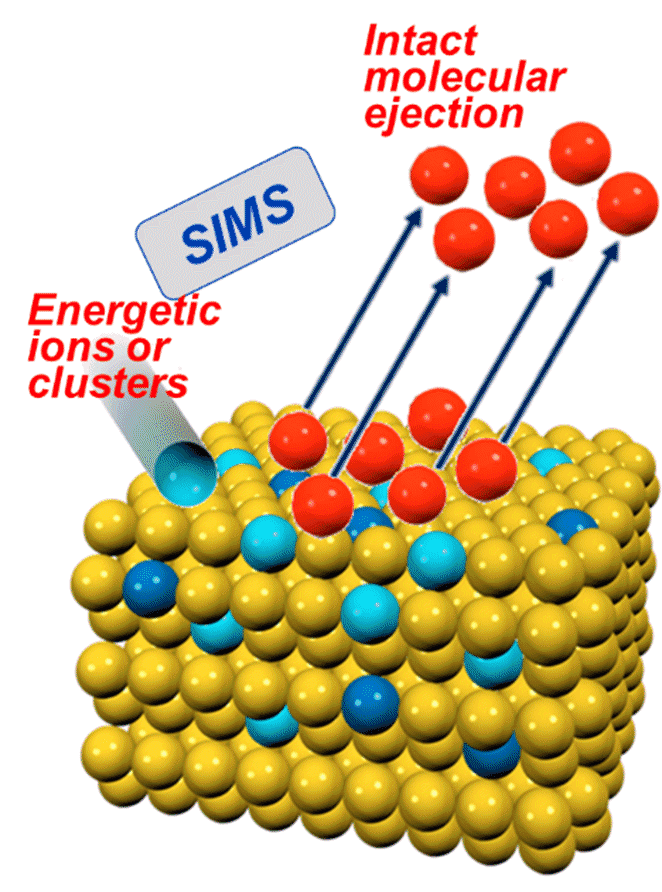
MeV Secondary Ion Mass Spectrometry (MeV-SIMS) : Combines the principles of SIMS with high-energy (MeV) primary ions. The electronic stopping processes at these energies produce significantly higher secondary ion yields with minimal fragmentation, allowing for molecular analysis while preserving depth resolution. MeV-SIMS bridges the gap between traditional SIMS and nuclear-based IBA, offering chemical and molecular information alongside elemental quantification.
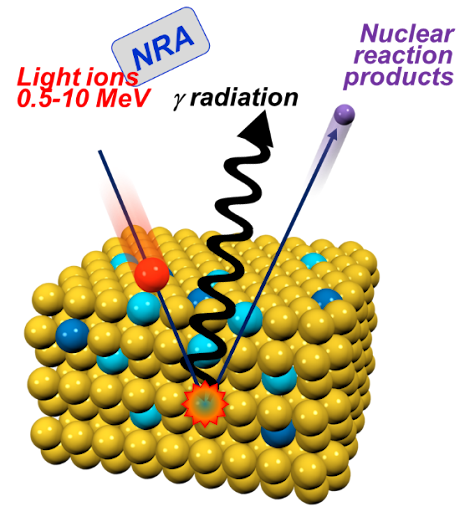
Nuclear Reaction Analysis (NRA) : Uses specific nuclear reactions to identify and quantify elements with high sensitivity.
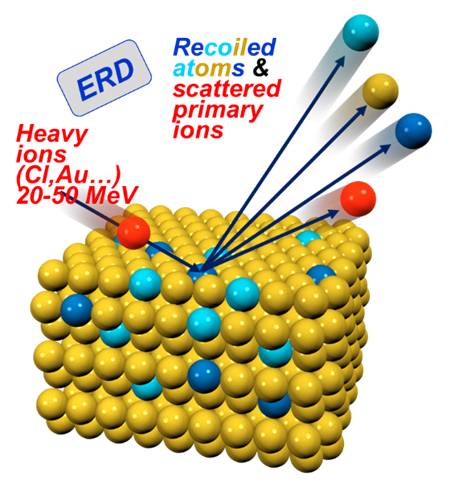
Elastic Recoil Detection Analysis (ERDA) : Detects atoms recoiling from the surface after ion impact, particularly useful for quantifying light elements such as hydrogen.
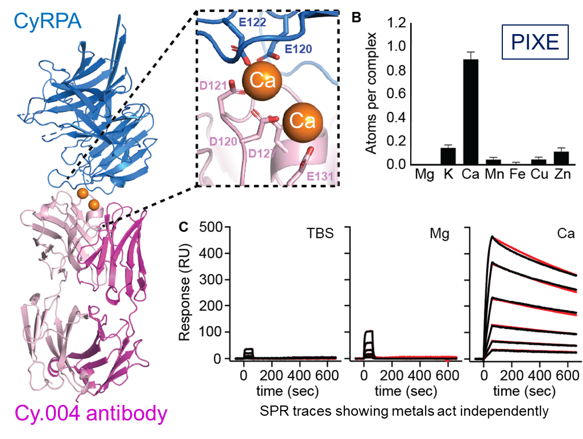
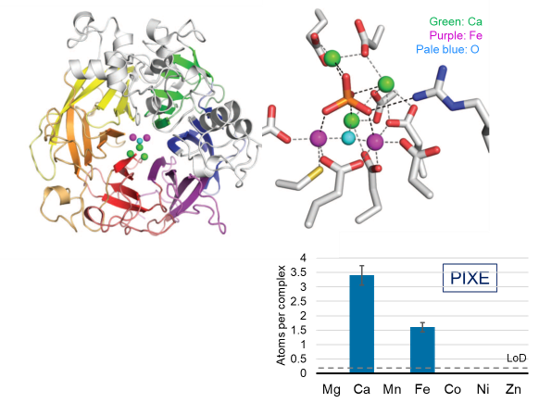
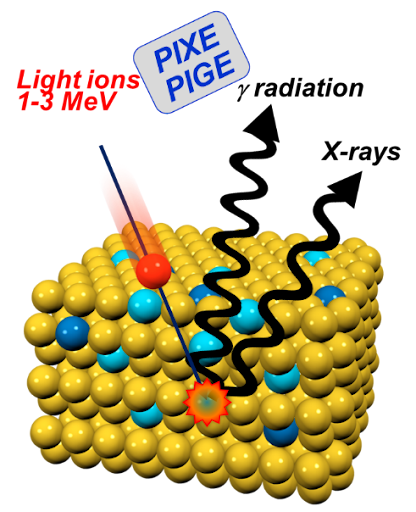
Particle-Induced X-ray Emission (PIXE) : Detects characteristic X-rays emitted when the incident ions ionize inner-shell electrons, allowing for multi-elemental analysis with high sensitivity.
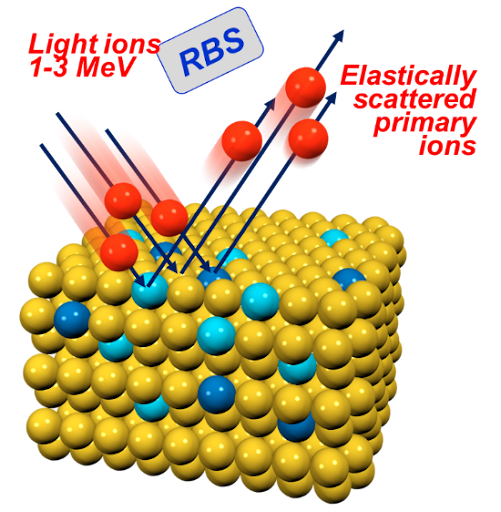
Rutherford Backscattering Spectrometry (RBS): Measures the energy of ions scattered elastically from nuclei, providing information on elemental composition and depth distribution.